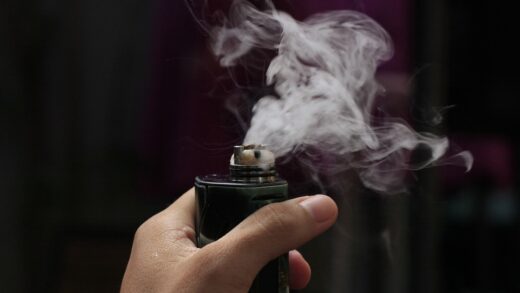
The connection between nicotine use and sleep disruption is well-established in clinical research but poorly understood by many vapers. People who switch from cigarettes to vaping often expect their sleep to improve as part of the broader health benefits of the switch, and are then confused when they continue to experience difficulty falling asleep, frequent night waking, or persistent tiredness on waking. The explanation is straightforward: the sleep disruption associated with cigarette smoking was primarily caused by nicotine, not by the other compounds in tobacco smoke, and vaping continues to deliver nicotine with the same physiological consequences for sleep.
The good news is that the specific habits most damaging to sleep quality are identifiable and modifiable without requiring vapers to stop vaping entirely. Understanding which behaviours cause the most disruption, and making targeted changes to timing and nicotine concentration in the evening, produces measurable improvements for most people within a few weeks.
Nicotine as a Central Nervous System Stimulant
Nicotine acts on nicotinic acetylcholine receptors throughout the central nervous system, producing a cluster of stimulant effects: increased heart rate, elevated blood pressure, heightened alertness and cognitive activation, and suppression of the adenosine-mediated drowsiness that builds naturally throughout the day as a sleep pressure signal. These effects are most pronounced in the period immediately after nicotine delivery, when blood plasma levels are at their peak, and they begin to dissipate as levels decline over the following one to two hours.
The physiological conditions required for sleep onset are essentially the opposite of the conditions produced by nicotine. Sleep onset requires a lowering of core body temperature, a decrease in heart rate and blood pressure, reduced cortical arousal, and the uninhibited accumulation of adenosine-mediated sleep pressure. Nicotine counteracts all of these simultaneously. Vaping immediately before bed introduces a stimulant at precisely the moment when the body is attempting to transition into sleep, and the consequence is measurably increased sleep latency — the time taken to fall asleep — along with reduced slow-wave sleep, which is the deepest and most physically restorative phase.
Research using polysomnography — detailed sleep monitoring in controlled settings — has consistently demonstrated these effects across various nicotine delivery methods. A 2021 systematic review of studies examining nicotine and sleep found significant associations between regular nicotine use and reduced sleep duration, increased sleep fragmentation, and subjective sleep quality impairment. The effects were observed regardless of whether the nicotine was delivered through smoking, patches, gum, or e-cigarettes.
Overnight Withdrawal and Night Waking
A second mechanism operates during sleep itself and is responsible for a distinct pattern of sleep disruption. Regular nicotine users develop physical dependence, and part of that dependence is the body’s expectation of maintaining nicotine above a certain baseline level. During sleep, when no nicotine is consumed, blood plasma levels decline continuously. In users with significant dependence, this progressive decline triggers mild withdrawal responses that are sufficient to cause partial or complete waking during the night.
This withdrawal-related waking typically occurs in the early morning hours — often between three and five in the morning — when nicotine levels have had several hours to decline from the previous evening’s peak. Vapers who experience regular unexplained early waking, without apparent environmental causes, may be experiencing nicotine withdrawal as a significant contributing factor. The withdrawal is not necessarily perceived as a conscious craving; it may manifest simply as waking and difficulty returning to sleep without any identified cause.
The intensity of overnight withdrawal is broadly proportional to daytime nicotine exposure. Vapers who use high-concentration nicotine throughout the day — twenty milligrams per millilitre nic salts through a pod system — maintain higher daytime peaks and therefore experience a larger drop during sleep than vapers at lower concentrations. This creates a counterintuitive situation where reducing daytime nicotine, or switching to a slower-delivery product in the evening, can improve overnight withdrawal symptoms by narrowing the gap between daytime and overnight levels.
Physical Effects of Vapour on Sleep Quality
Beyond the systemic effects of nicotine, the inhaled aerosol of vaping has direct physical effects on the upper airway that are relevant to sleep quality. Both propylene glycol and vegetable glycerin are hygroscopic compounds that draw moisture from the tissues they contact. Heavy vaping in the hours before bed can cause a degree of throat and mouth dryness that persists into the night, contributing to increased snoring through partial airway drying, micro-arousals from airway discomfort, and the general disruption of sleeping with a dry mouth.
Some vapers experience mild upper airway irritation from specific flavour compounds at high concentrations, particularly those involving certain cinnamaldehyde or menthol components, and this irritation may contribute to increased airway resistance and breathwork disruption during sleep. These effects are generally modest but cumulative with other sleep-disrupting factors.
Hydration is the primary mitigation for these physical effects. Drinking adequate water throughout the day reduces the net drying effect of regular vaping on the airway tissues. A glass of water before bed and another kept beside the bed for night waking provides immediate relief and supports better overnight airway comfort. This is a simple change that many vapers find produces a noticeable improvement in sleep continuity within a few days.
Practical Interventions for Better Sleep
The most impactful change for most vapers experiencing sleep disruption is establishing a nicotine cut-off time in the period before bed. The goal is to allow blood nicotine levels to begin declining before sleep onset, giving the stimulant effect time to dissipate and the sleep initiation process an opportunity to proceed without active counteraction. For most users, a cut-off of sixty to ninety minutes before intended sleep time produces a noticeable improvement in sleep onset speed.
For vapers who find a hard cut-off difficult because the craving and habit association around a last vape before bed are strong, a graduated approach is often more sustainable. Using a lower-nicotine concentration liquid in the final two hours before bed — switching from twenty milligrams to six milligrams, or from a nicotine-containing liquid to a zero-nicotine version — reduces the pre-sleep nicotine spike without requiring complete abstinence from the device itself. The physical ritual of vaping is preserved; the pharmacological disruption is reduced.
Switching the type of product used in the evening is another option. A slow-release nicotine lozenge or patch applied one to two hours before bed maintains a steady, low-level nicotine baseline overnight that reduces the withdrawal gradient without the stimulant spike of vaping. This approach is particularly useful for vapers whose primary sleep problem is early morning waking rather than difficulty with sleep onset, as it addresses the overnight withdrawal component specifically. This kind of combination approach should be discussed with a pharmacist to ensure the total nicotine dose is appropriate.
Sleep hygiene practices — consistent bedtime and wake time, limiting screen exposure in the final hour, keeping the bedroom cool and dark — compound the benefit of nicotine management changes. Neither category of intervention is maximally effective in isolation, but together they can produce significant and sustained improvement in sleep quality for vapers who make a genuine effort to implement them.
Transition from Cigarettes and Sleep Adjustment
Vapers who have recently switched from cigarettes often experience a period of sleep disruption that is distinct from the ongoing nicotine effects described above. This transitional disruption reflects the change in nicotine delivery pattern rather than an inherent problem with vaping. The body has adapted its neurobiology, including the regulation of sleep, to a specific pattern of nicotine intake from cigarettes, and the shift to a different delivery mechanism — even at comparable total daily nicotine — disrupts that established pattern temporarily.
Cigarettes deliver nicotine in a characteristically sharp pharmacokinetic profile: fast onset, high peak, rapid decline. Nic salt e-liquids produce a similar profile, but with differences in onset timing and peak concentration depending on the device and liquid combination. Freebase nicotine in a sub-ohm device produces a slower, more sustained release that the body may experience as a genuinely different signal pattern. These differences can temporarily disrupt established sleep architecture during the weeks immediately after switching.
This transitional disruption is expected and normally resolves within two to four weeks as the body adapts to the new delivery pattern. Recognising it as a temporary adjustment rather than a permanent feature of vaping helps vapers persist through the initial period without concluding that vaping has made their sleep permanently worse. If sleep disruption continues at a level that significantly impairs daily functioning beyond six weeks after switching, a conversation with a GP is warranted to assess whether other factors are contributing.